
Sylvain Catherine

Research

Working Papers

Work in progress and papers under review. Full PDFs are linked below.

Pension reforms in inheritance societies

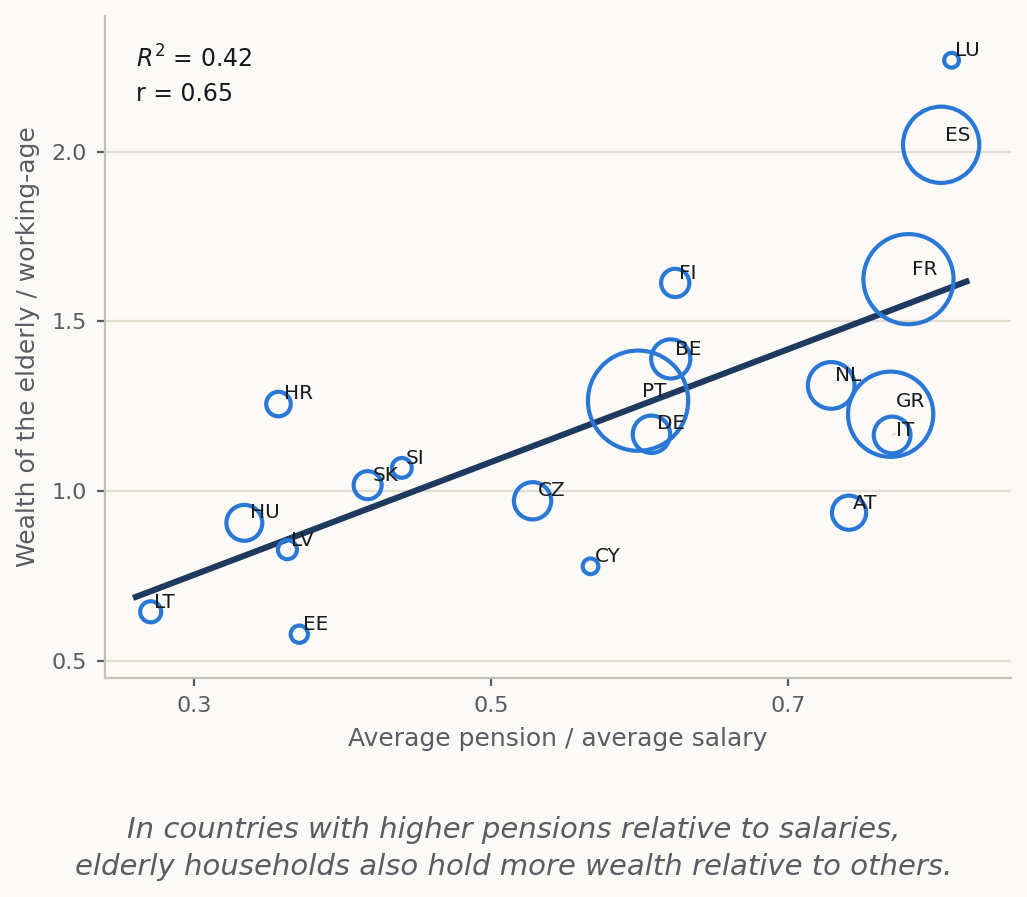
Examines how pay-as-you-go pension systems redistribute wealth across cohorts and amplify the role of inheritance when economic growth slows. When governments close the resulting budget gap by raising contribution rates rather than cutting benefits, workers' net wages fall while retirees' resources are preserved, tilting wealth toward the elderly — the more so the more generous the system. Household data from twenty European countries confirm these predictions.

Pension generosity and the relative wealth of the elderly across European countries
Reject & Resubmit · American Economic Review

Who Gains When Interest Rates Fall?

with Max Miller, James Paron and Natasha Sarin

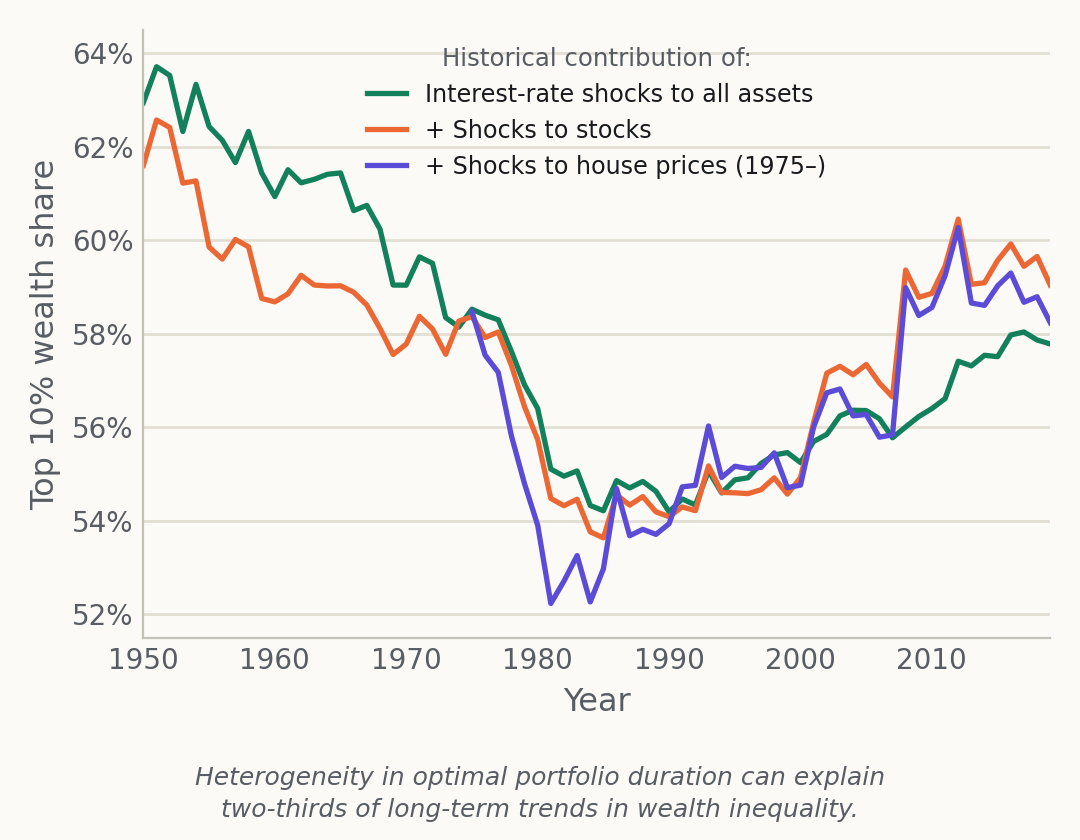
Examines how household wealth responds to interest rate changes using a life-cycle model. Middle-aged and wealthier households hold more long-term assets, matching observed U.S. patterns. Declining rates boost wealth inequality while rising rates reduce it — though these effects are partly offset by changes in human capital and Social Security benefit valuations.

Who Gains When Interest Rates Fall?
Revise & Resubmit · Journal of Finance

Robustness Checks in Structural Analysis

with Mehran Ebrahimian, Mohammad Fereydounian, David Sraer and David Thesmar

An efficient computational method for estimating structural model variants, using approximations of the relationship between moments and parameters and requiring only sparse model discontinuities. Applications to corporate finance and portfolio choice models demonstrate its use for identification, robustness, and model misspecification.
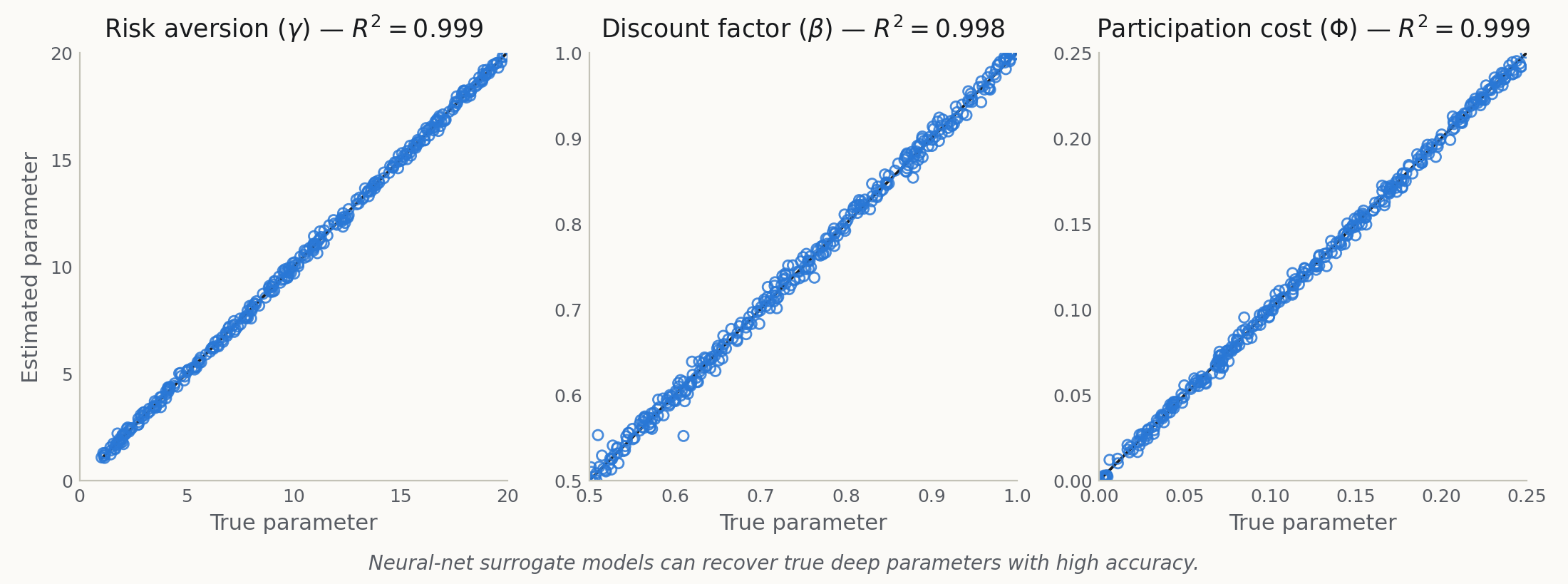
Robustness Checks in Structural Analysis

Labor Market Risk and the Private Value of Social Security

Using a calibrated life-cycle model, quantifies how labor market risk reduces workers' private valuation of Social Security by roughly 46%. For workers under 30, the certainty-equivalent value is negative, with systematic risk exposure peaking later in the lifecycle.